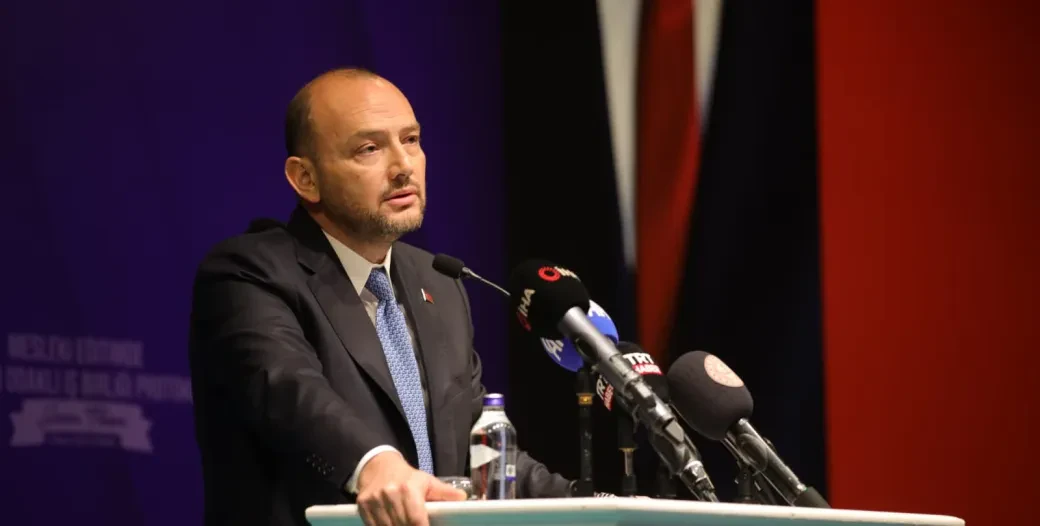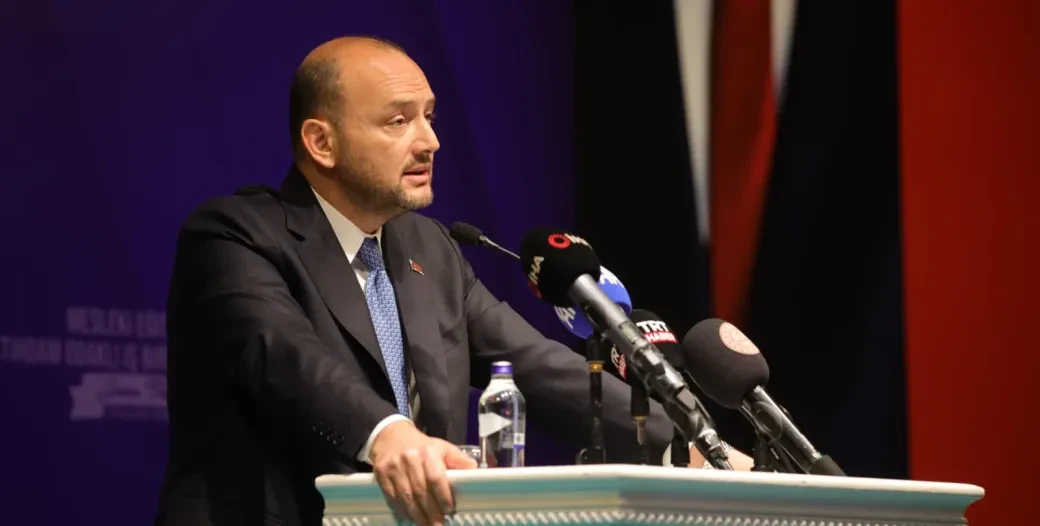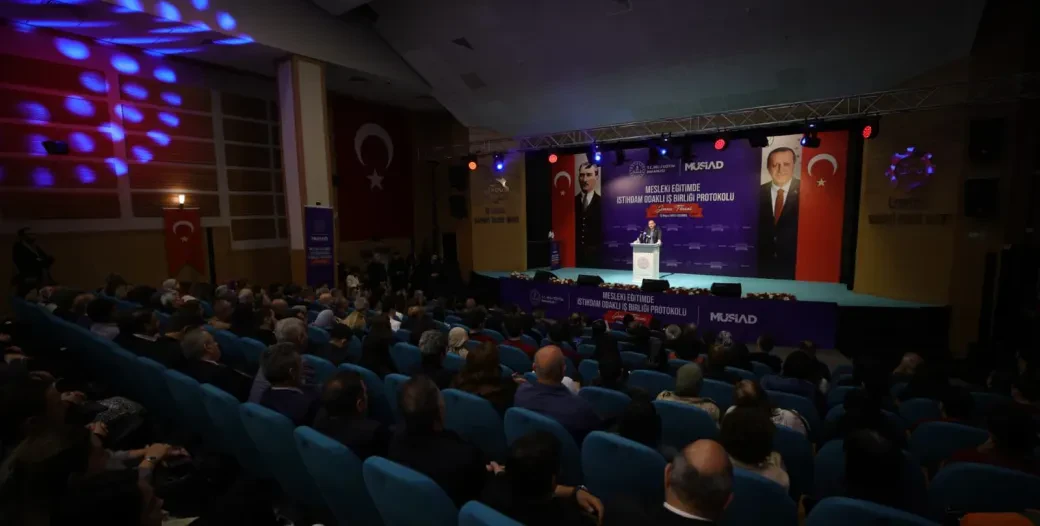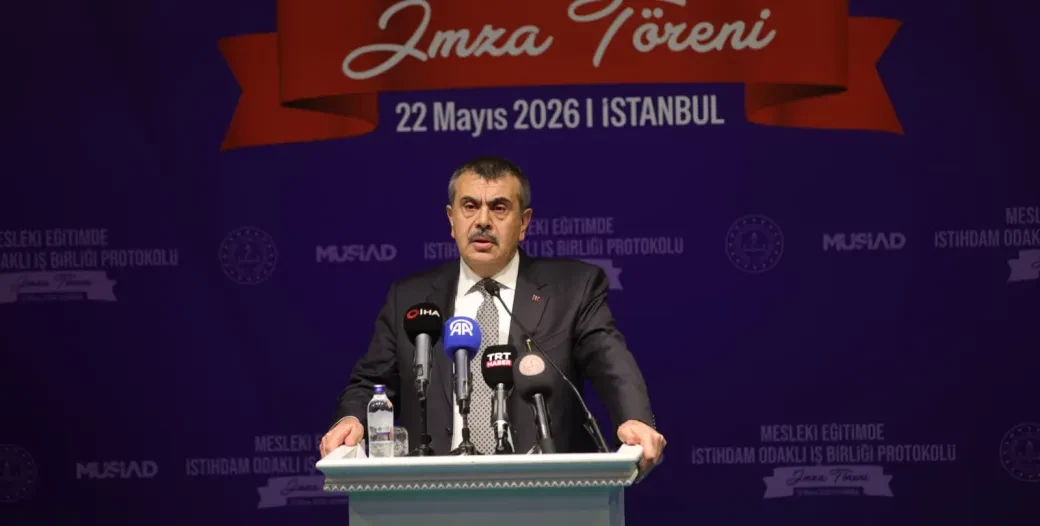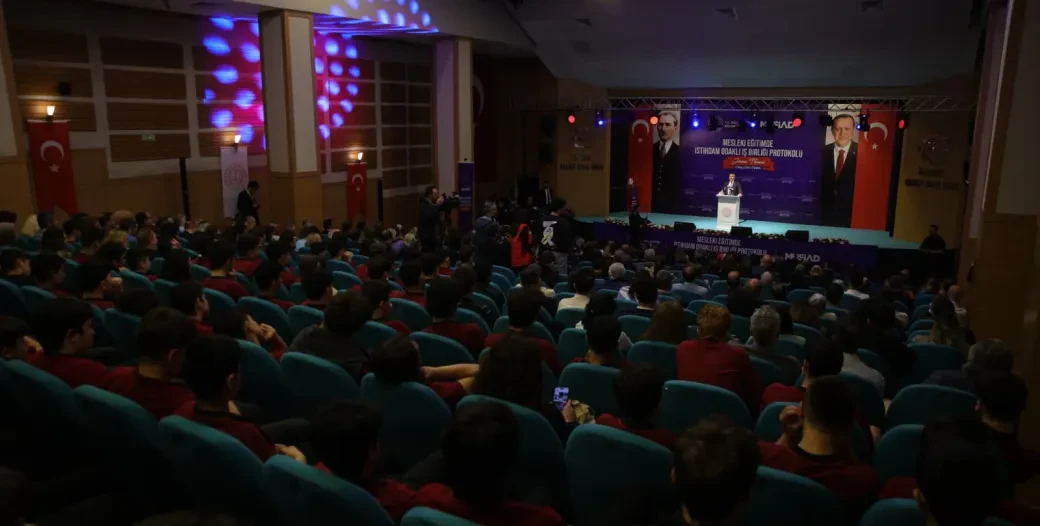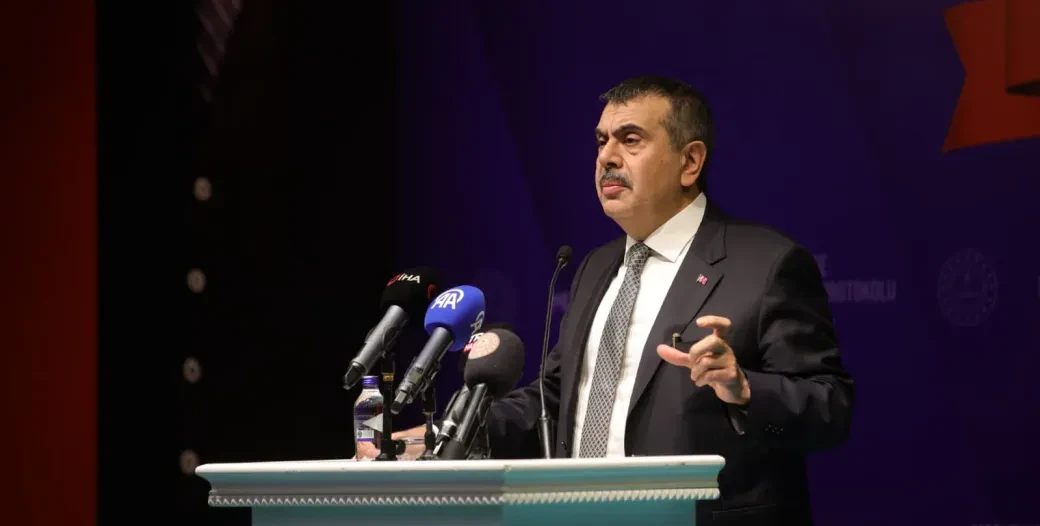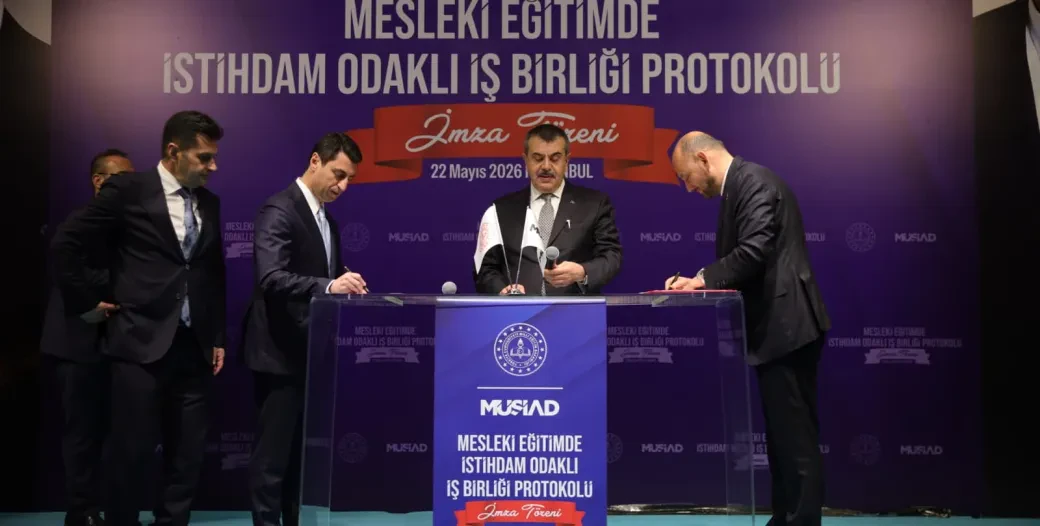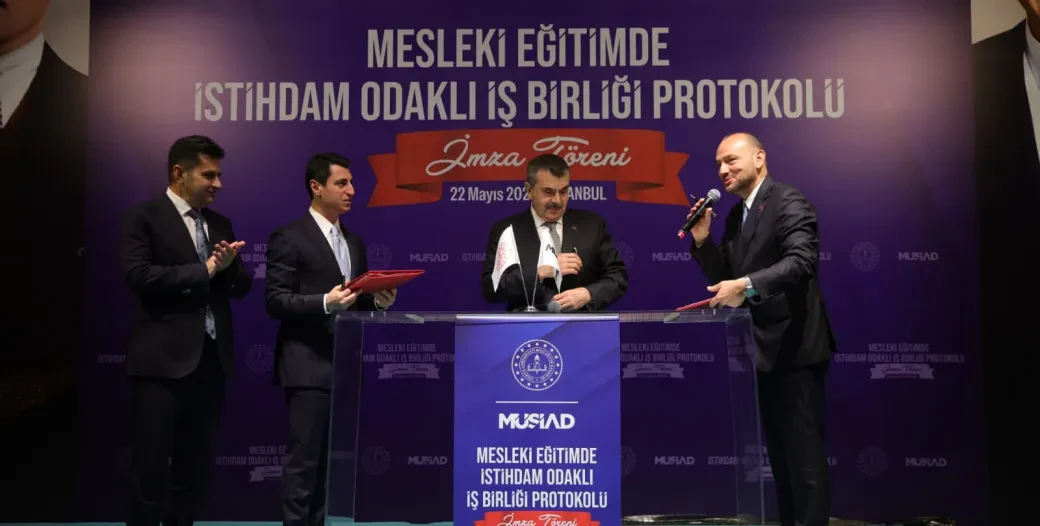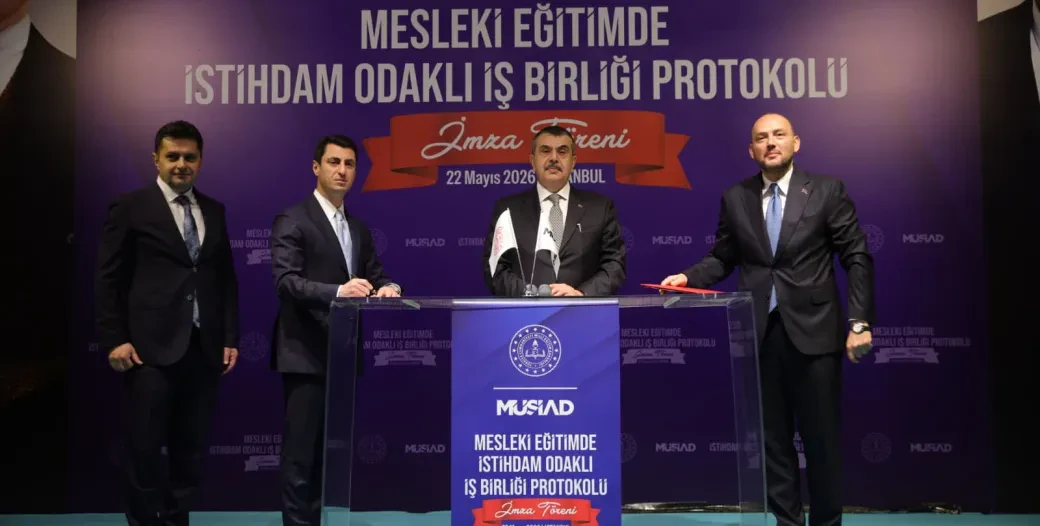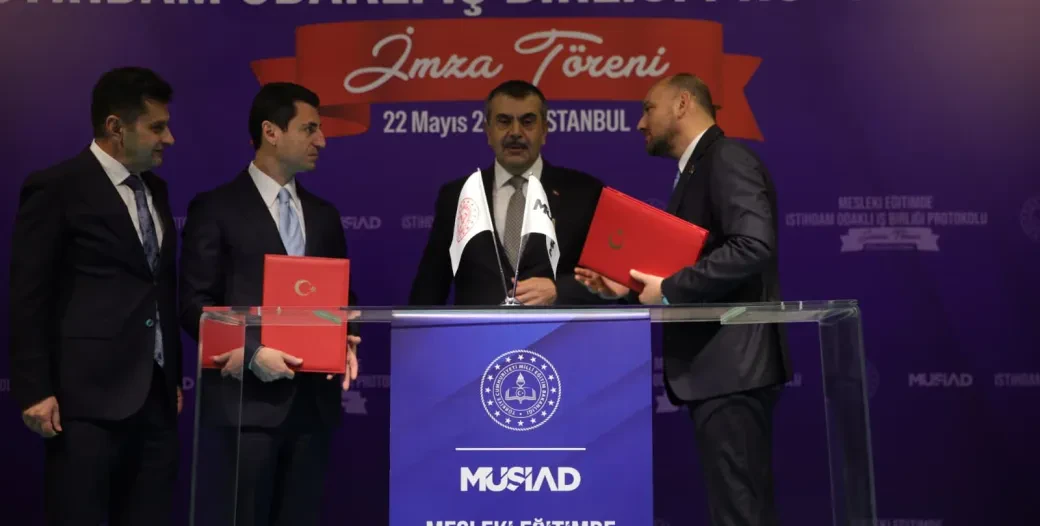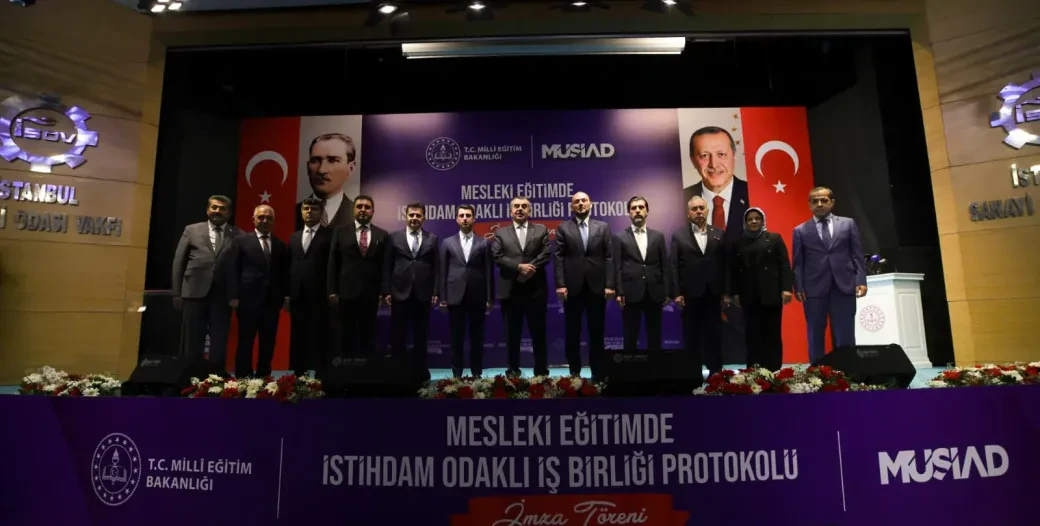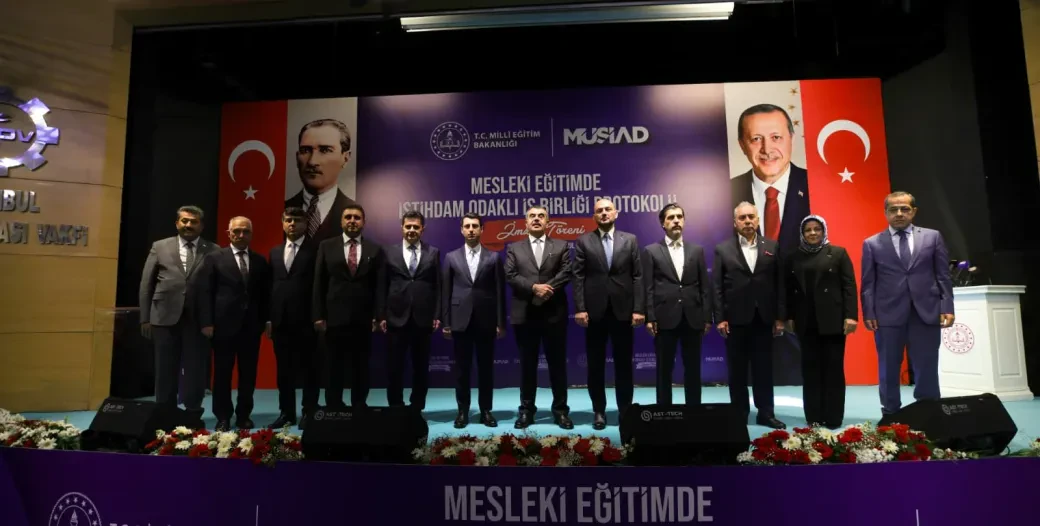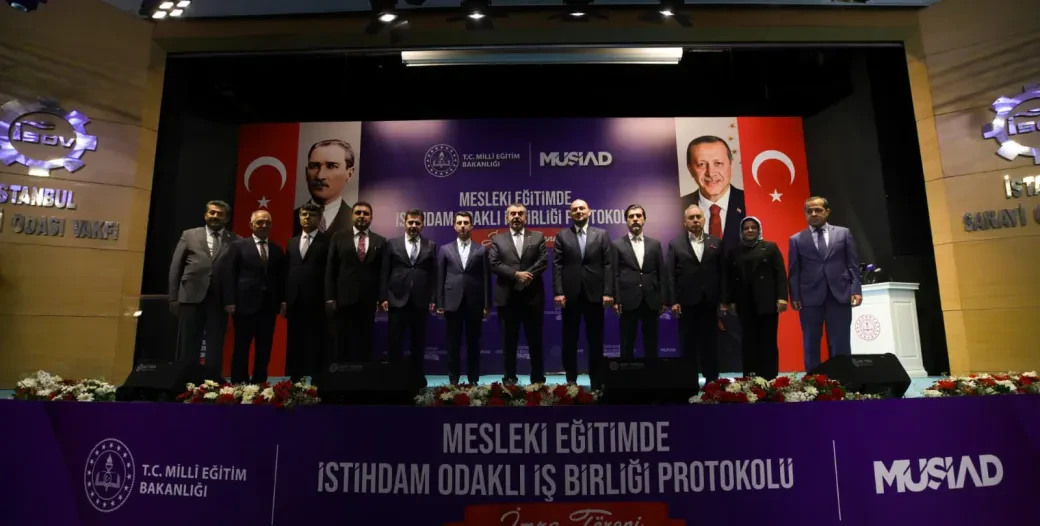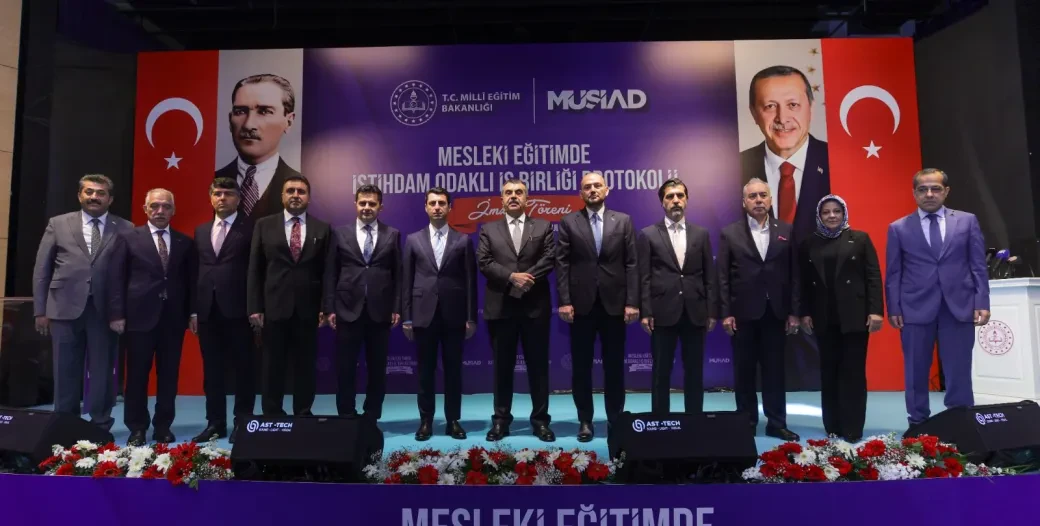
Within the scope of the cooperation protocol signed between the Independent Industrialists and Businessmen Association (MÜSİAD) and the Republic of Türkiye Ministry of National Education, an important step has been taken to bring young graduates of vocational and technical secondary education into working life. The protocol was signed at a ceremony held at the İSOV Dinçkök Vocational and Technical Anatolian High School in Beşiktaş with the participation of Minister of National Education Yusuf Tekin and Burhan Özdemir. Within the scope of the program, which will be implemented with the contribution of MÜSİAD branches across Türkiye, a total of 10 thousand young people, at least 5 thousand in the first year and at least 5 thousand in the second year, will be employed at MÜSİAD member enterprises for a period of two years.
MÜSİAD positions young people at the foundation of its Value-Based Development Vision and its community-based development strategy. In the light of the rapidly changing technological developments and economic transformations in the world, it is of great importance for young people to be more foresighted, competent and competitive in working life. Accordingly, MÜSİAD aims to support young people in developing their vocational skills, acquiring the qualifications required by the modern business world and taking their first steps into a sustainable career.
This step is not merely an employment protocol; it is a concrete and measurable commitment to social development that carries Türkiye's vision for the coming decade into the field.
The technological transformation experienced on a global scale and referred to as the fourth industrial revolution, artificial intelligence applications, digital production systems and green transformation processes are increasing the importance of human resources possessing technical knowledge and applied skills. While many countries, notably Germany, Switzerland and China, place vocational education at the centre of their development policies, this step taken through the cooperation of MÜSİAD and the Ministry of National Education presents an important model that will support Türkiye’s production power.
The Protocol Will Touch the Lives of Ten Thousand Young People
Within the scope of the protocol, the aim is not only for young people to participate in employment but also for their processes of adaptation to working life to be supported. Accordingly, at least 5 thousand young graduates of vocational and technical secondary education will find the opportunity to work at MÜSİAD member enterprises, while systematic matching processes will be carried out between graduates and enterprises.
Information activities will be carried out so that young people can benefit effectively from scholarships, accommodation and public support; awareness of vocational education will be raised through career days, technical trips, competitions and fairs. In addition, applied training processes will be supported through enterprise-based training models, and guidance and support programs for students' higher education preparation processes will also be implemented.
“Türkiye’s Greatest Capital Is Its Productive Youth”
Making an assessment at the protocol ceremony on the matter, Burhan Özdemir drew attention to the fact that vocational education carries strategic importance for Türkiye’s development targets.
Özdemir made the following statements:
“MÜSİAD is not merely a profit-oriented business world organization; it is a civil society organization that sees social development as an inseparable part of economic growth and that has made it its mission to carry the principle of 'Just Order' into the business world. This protocol is the most concrete expression of that mission.
If Türkiye wants to rise to the upper income group in the global competitive environment of the 2030's, it must base this journey on an army of engineers, technicians, master craftsmen and artisans. The qualified blue collar is the true producer of added value. As MÜSİAD, with this protocol we once again demonstrate our belief in the hands that will build our future.
This protocol that we sign today aims not merely for a young vocational high school graduate to get a job, but for that young person to build a strong future. Türkiye's greatest capital is its skilled and productive youth. As MÜSİAD, investing in this capital is both a responsibility and an honour.”
The protocol, which will be implemented with the contribution of all MÜSİAD branches operating across Türkiye, will be applied in many fields, notably the production, technology, logistics, health, construction and service sectors. With a cooperation model covering the whole country, the aim is for 10 thousand graduates of vocational and technical education to participate more strongly in working life.
MÜSİAD regards this protocol as only a beginning and aims to broaden its scope and increase the number of participating companies in the period ahead.
Information Note:
From Germany to China: Vocational Education Is the Backbone of the Economy
Germany: In Germany, which has one of Europe's lowest youth unemployment rates (%6.7 – 2024), approximately %50 of students enrol in a vocational education program at high school age. Thanks to the practice-based 'dual system', %74 of apprentices are employed immediately after completing their training.
Switzerland: More than %65 of students in upper secondary education take part in vocational education programs. In Switzerland, which has one of the highest VET enrolment rates among OECD countries, the employment rate of the 25-34 age group who received vocational education is %83.2, while for general education graduates this rate remains at %73.8.
China: In China, which has the world's largest vocational education system, there are 11,133 vocational schools and approximately 35 million students. As of 2024, more than %70 of the new front-line workers in modern manufacturing, strategic emerging sectors and the service sectors are vocational school graduates.
OECD Average: The employment of the 25-34 age group who received vocational education is %83, while for general education graduates this rate remains limited to %73. (OECD, 2024)