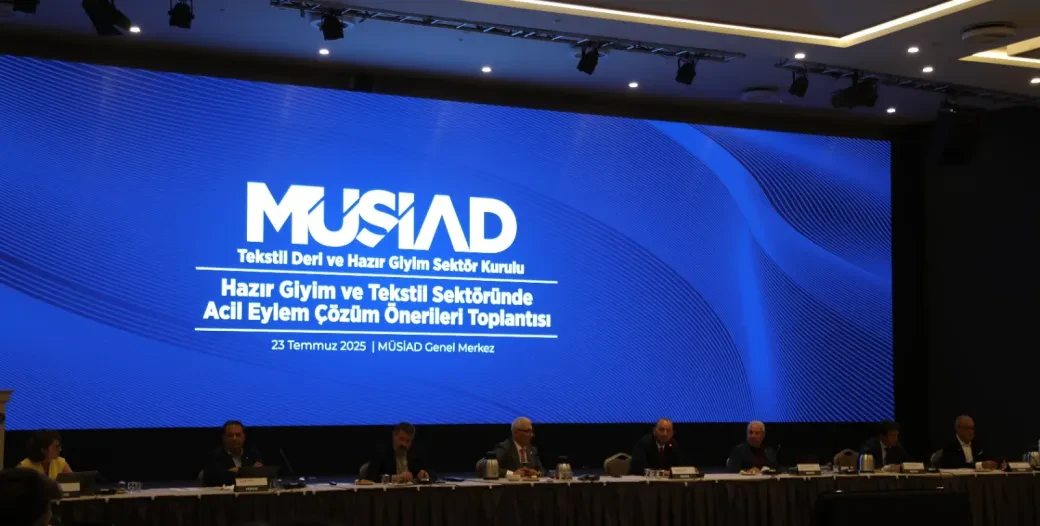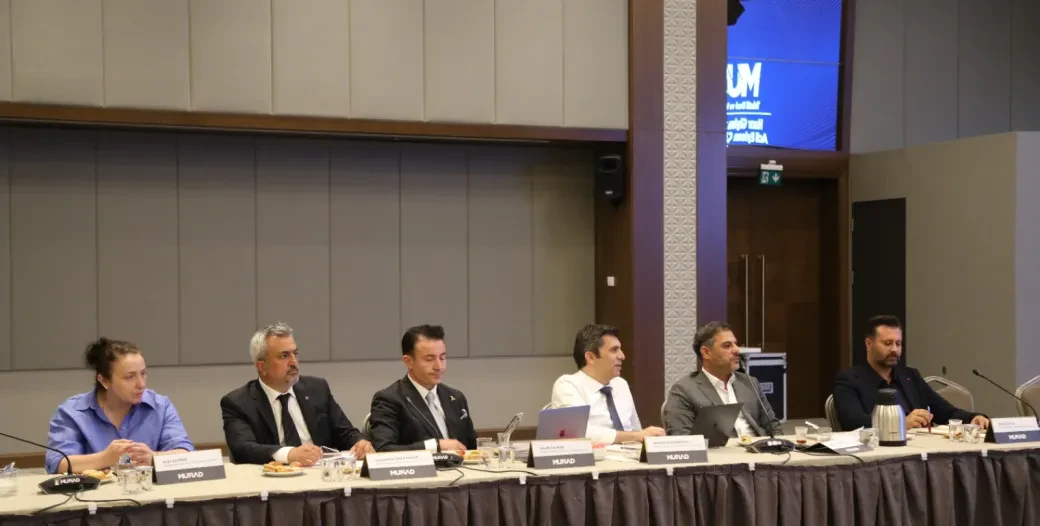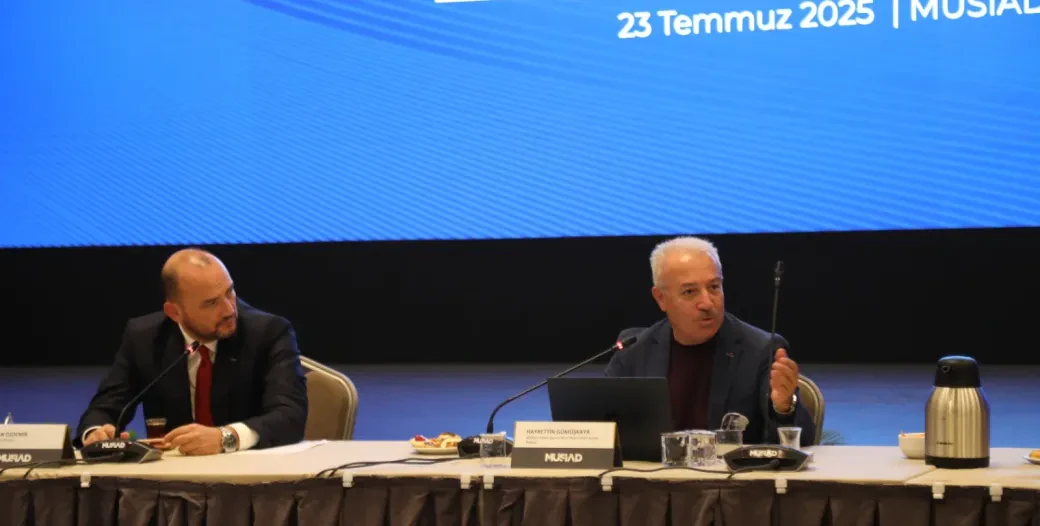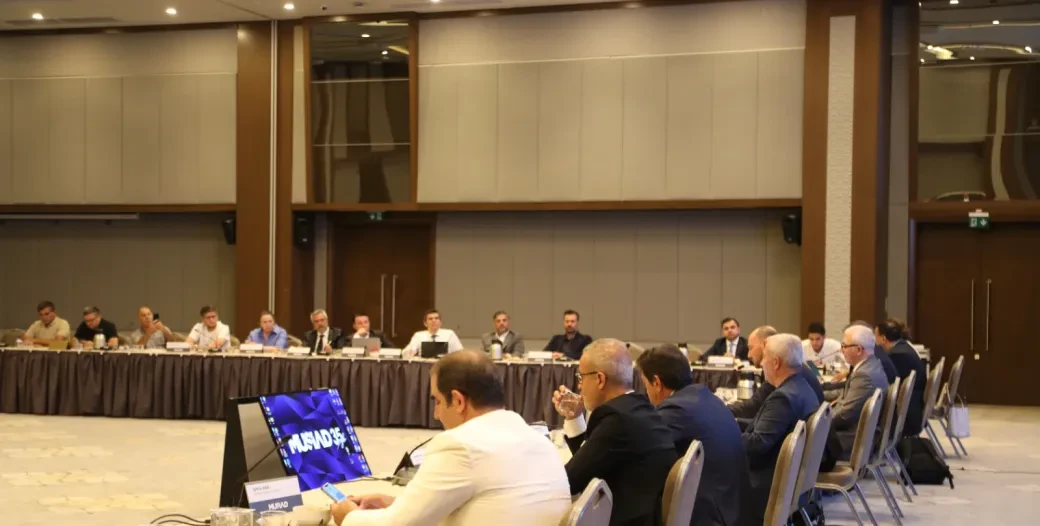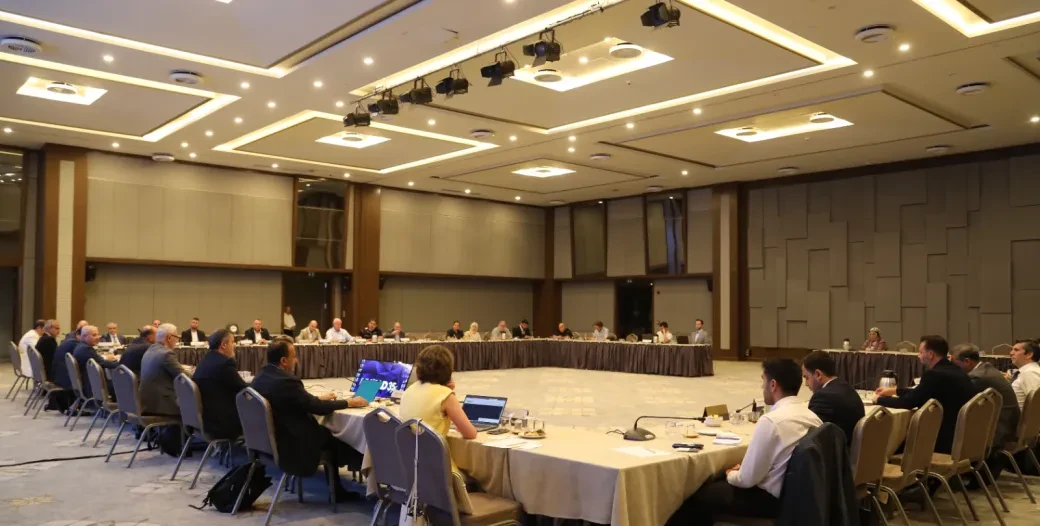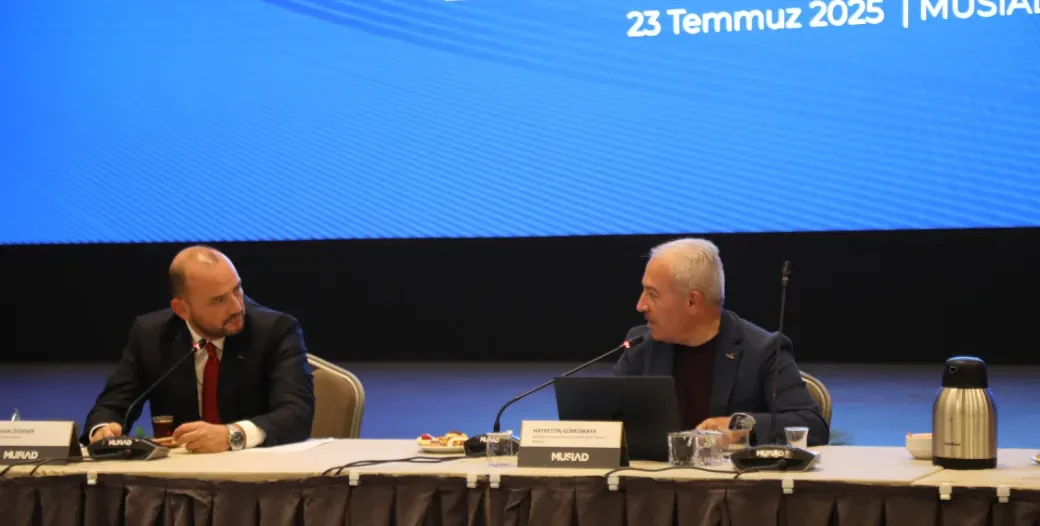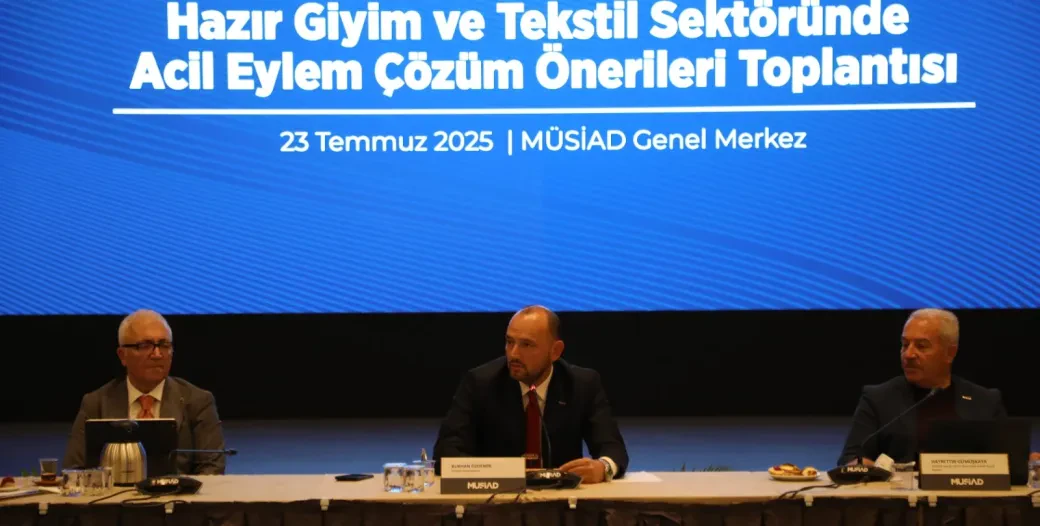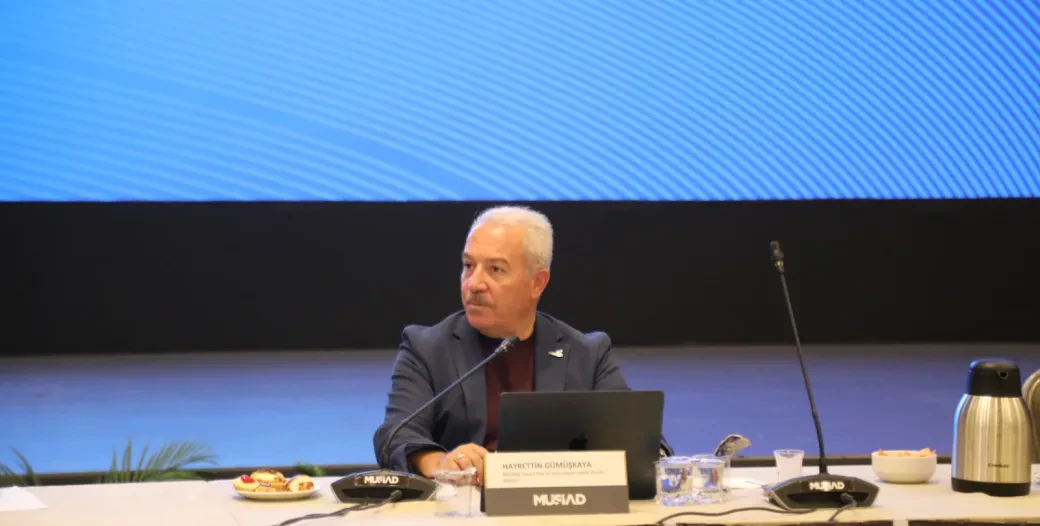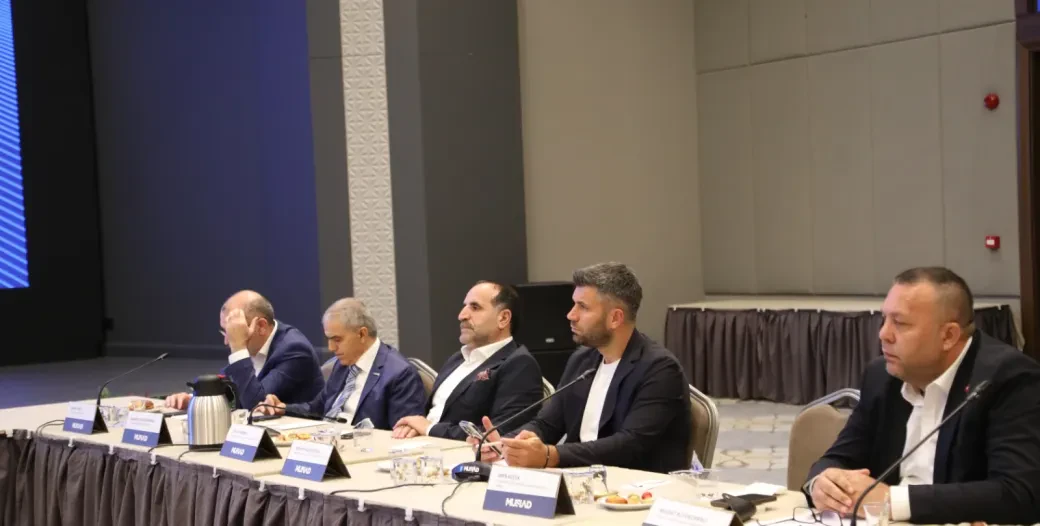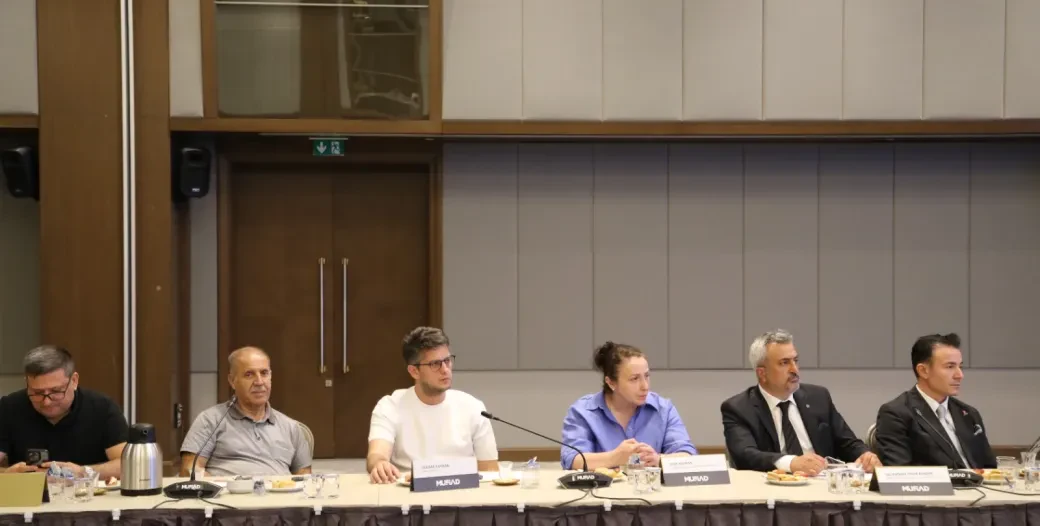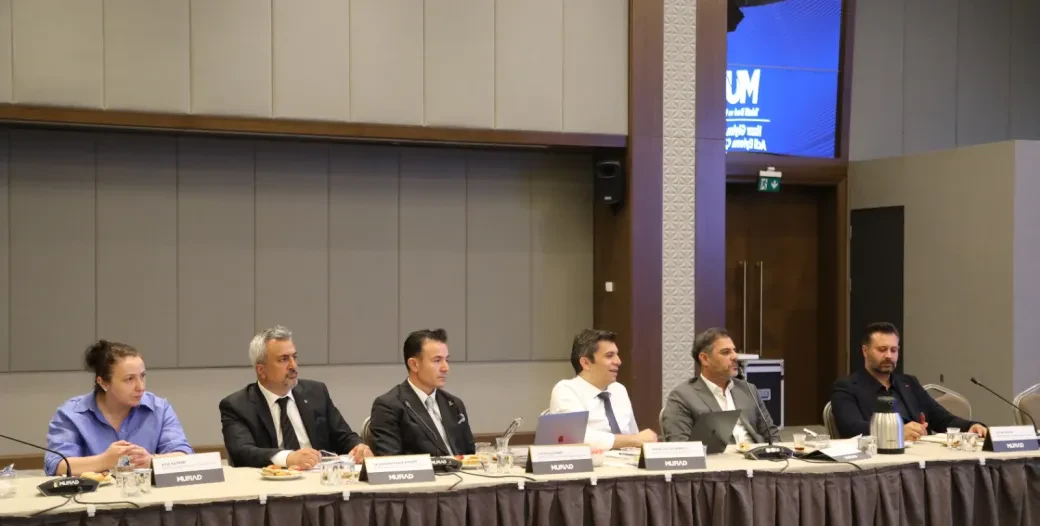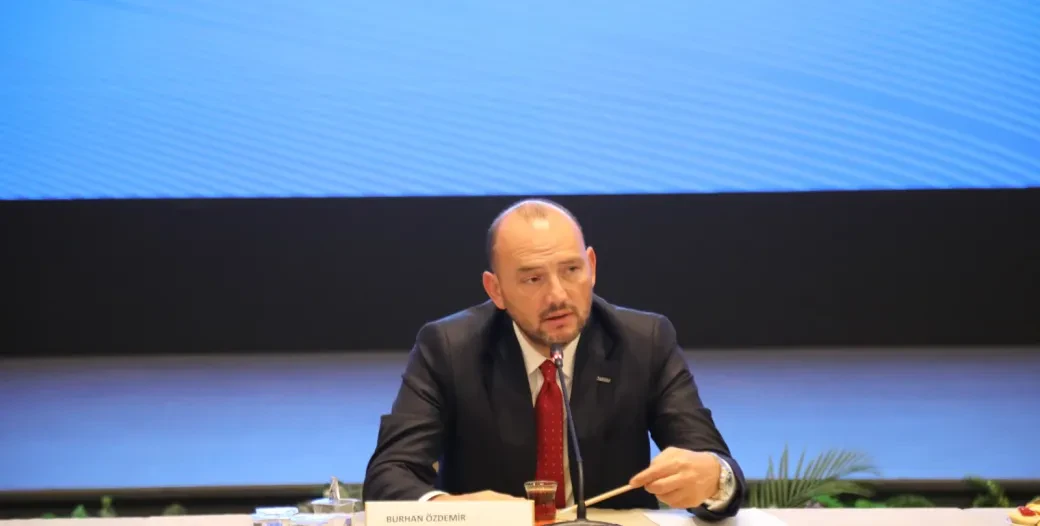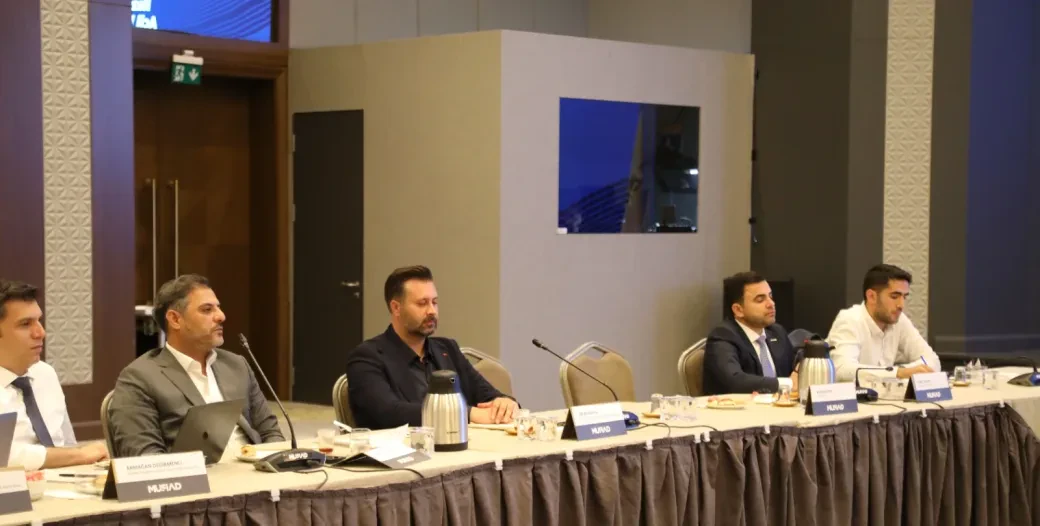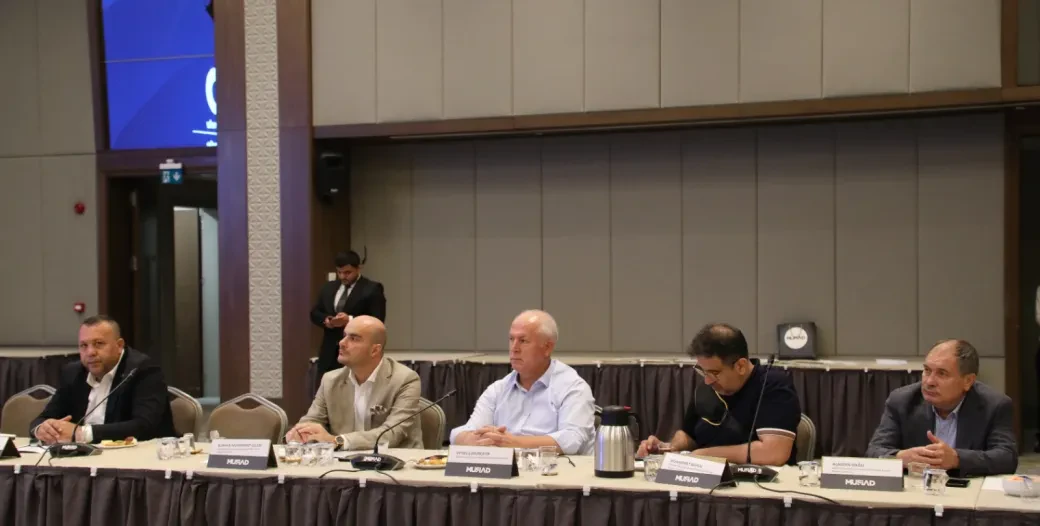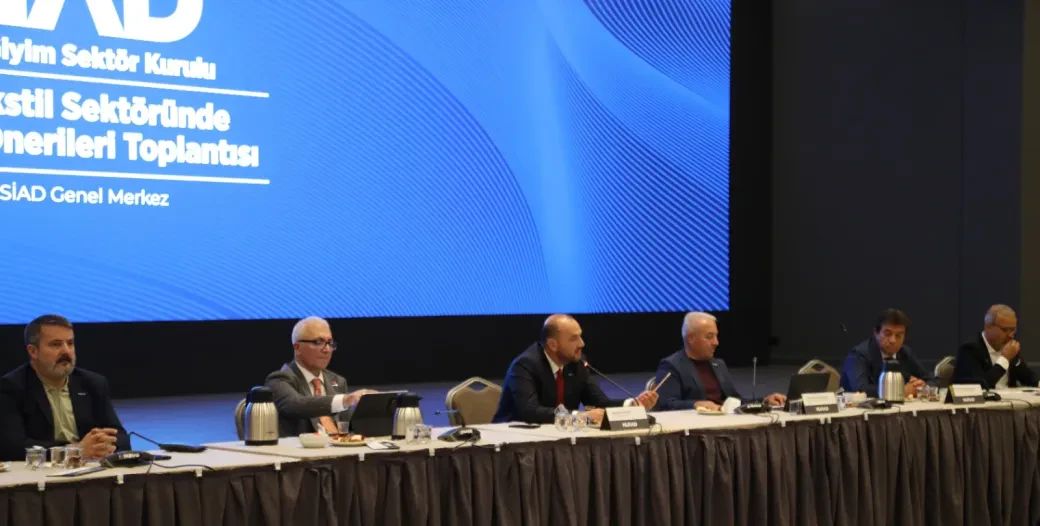
Various sectoral representatives took part in the Emergency Action Solution Proposals Meeting for the Ready-Made Clothing and Textile Sector, held on Wednesday, 23 July at the MÜSİAD Head Office by the MÜSİAD Textile, Leather and Ready-Made Clothing Sector Board, which was hosted by MÜSİAD President Mr. Burhan Özdemir, MÜSİAD Deputy President Mr. Ahmet Doğan Alperen, MÜSİAD Sector Boards Commission Chairman Mr. Cemal Özen and MÜSİAD Textile, Leather and Ready-Made Clothing Sector Board Chairman Mr. Hayrettin Gümüşkaya, with the participation of İSO Professional Committee Chairman Mr. Süleyman Orakçıoğlu, TOBB Türkiye Apparel and Ready-Made Clothing Industry Assembly Chairman Mr. Şeref Fayat, İTO Professional Committee Member Mr. Şenol Aras, Turkish Clothing Manufacturers' Association President Mr. Toygar Narbay and IHKIB R&D Branch Head Ms. Hale GÜLBAZ.
At the meeting attended by sectoral representatives, consultations were held on the current problems of the sector. The solution proposals that emerged as a result of the consultations were compiled into a report and shared after the meeting.
The declaration of solution proposals shared after the meeting:
1 )- Solutions for Financial Costs
- Separating direct investment and production loans from general policy and reducing the interest rate to half the policy rate,
- Reducing by at least %50 the commission rates applied by banks, particularly on credit cards, and the costs they create under the name of expenses,
- Collecting interest and commissions on rediscount loans at the end of the term, and reducing by %50 the commissions and other charges taken by banks on these loans,
- Raising Eximbank loan supports to %20 of the export values realized on a company basis, and up to %10 of the total export amount, together with not requiring guarantees such as bank letters of guarantee that bring additional costs and with extending maturities, will provide producer and exporter companies affected by the economic contraction with significant competitive and survival strength.
- Providing companies with large receivables from firms that have declared composition with creditors the facility to use loans up to the amount of their receivables, and passing on %50 of its cost, even if on a long-term basis, to the firms declaring composition with creditors, would be a preventive measure against the emergence of new compositions.
2)- Solutions for Foreign Trade and Exchange Rate Policies
- For producers and exporters exposed to the destructive effect of the contraction accompanying the world economies and to the destructive cost of the excessive divergence in inflation and exchange rate increase rates, incoming export proceeds may be processed at a rate supported by at least %10; this support, however, may be provided only to those whose export product has a domestic contribution rate of at least %50 and above, and who export from production or produce and export under their own domestic brand, until the exchange rate and inflation increase become balanced.
- Basing the foreign exchange rate valuation policy on a policy that moves in parallel with inflation, and turning this into a state policy (preventing change according to the minister to be appointed), will enable all our exporting companies to make long-term plans. It will ensure the disappearance of situations such as the inability to form forward prices in exports, or incurring losses or losing orders as a result of incorrect forecasts.
- One of the most important obstacles to exporting companies achieving their prices is the taxes levied under the name of excessive anti-dumping and customs duties applied to the import of products used as raw materials and intermediate goods in production; abolishing these and, in return, applying %200 tax on the import of finished products, that is, products ready for final use and consumption, into the domestic market, will prevent the unfair competition to which our exporting companies are exposed. In other words, let the companies that take their capital, their know-how and their trained manpower and go to countries such as Egypt produce there and sell to foreign countries. There is no problem with that. The problem is that these opportunities are carried to those countries and the final products produced there are brought back into Türkiye, causing the destruction of the producers who remain inside.
- Correcting the excessively bureaucratic implementation principles that make the use of the inward processing regime impossible, and transferring back to the Exporters' Associations the authority in the process of obtaining and closing these documents,
- Urgently lifting the heavy visa conditions applied to wholesale purchasing customers coming from abroad (Africa, Iraq, etc.) and the problem of visas not being granted in the great majority of cases,
- Producing solutions aimed at improving the visa practices, particularly of Europe and America, for Turkish citizens travelling abroad,
3)- Solutions for Labour Costs
- Putting into operation İŞKUR training supports with a term of at least 1 year, equal to the number of personnel who left the workplace under the EYT arrangement, to compensate for the loss of know-how and manpower experienced in industry with the EYT implementation,
- Raising the labour supports of exporting producers to TRY 2,500 until the exchange rate and inflation increases come into parallel; re-applying the short-time working allowance implemented during the pandemic period for approximately 1 year for those businesses that have reached the point of closing their workplaces and have halted their operations, so that they can get through the period of economic contraction, will prevent irrecoverable company losses.
- Eliminating the unfair regulations directed against employers in labour lawsuits, which disrupt industrial peace and turn into a source of gain for ill-intentioned structures, and placing the burden of proof on the claimant,
- Opening nurseries in every OIZ, to be jointly coordinated by the Ministry of Family, the Ministry of Industry, the OIZ management, municipalities and governorships, and removing from the industrialist's shoulders the obligation to run a nursery, which requires expertise, will both prevent exporting producers from suffering customer losses and penal sanctions and make a great contribution with regard to the decline in the population growth rate.
4)- Solutions for Energy Costs Used in Production
- Long-term resources and grants should be provided to companies that will establish their own power plants from renewable sources; the urgent removal of the existing practices, drowned in bureaucracy and left to the mercy of distribution companies, will make a great contribution to reducing companies' production costs. It will also be instrumental in reducing energy imports, one of our major import items.
- Expanding grant support programmes and mentoring services for the practices that are compulsory within the scope of the Green Deal, and in particular providing our companies with the opportunity to benefit to the maximum extent from European Union funds and grants in order to implement the practices within the scope of the Green Deal Protocol, will provide a great competitive advantage.
5)- Solutions for Logistics Costs
- Making regional logistics centres more effective, and reviewing the Eastern-Southeastern and Central Anatolia Mersin/İskenderun line so that costs are minimized and it is used more effectively,
- Air cargo, warehousing fees and the transporter monopolies formed at all ports cause irrecoverable costs that have lost their economic meaning. This field must without fail be brought to the competitive working conditions it ought to have,
- Reducing logistics costs through practices such as freight support and VAT exemption in the transport of export products carried out with domestic transport vehicles will play a major role in bringing product costs to a competitive point and in reducing inflation.