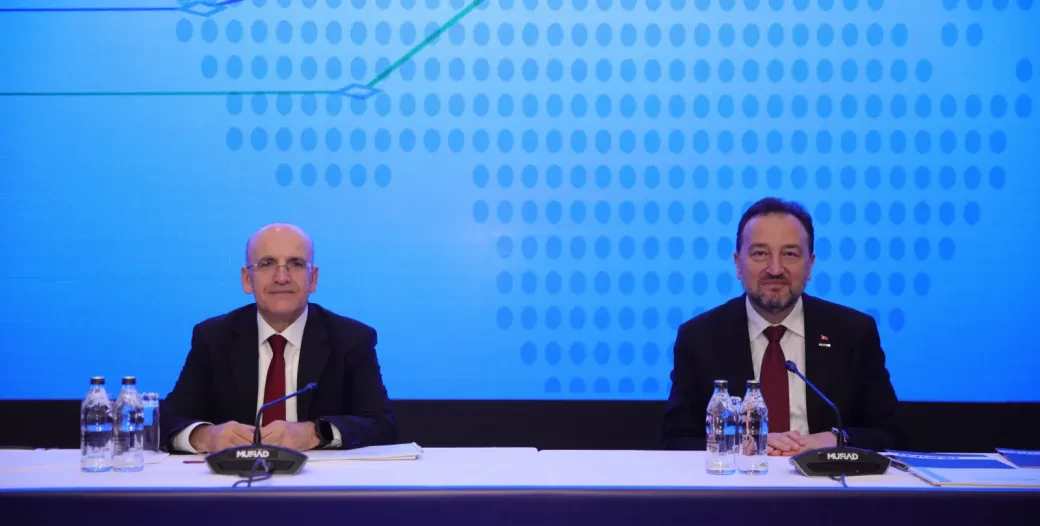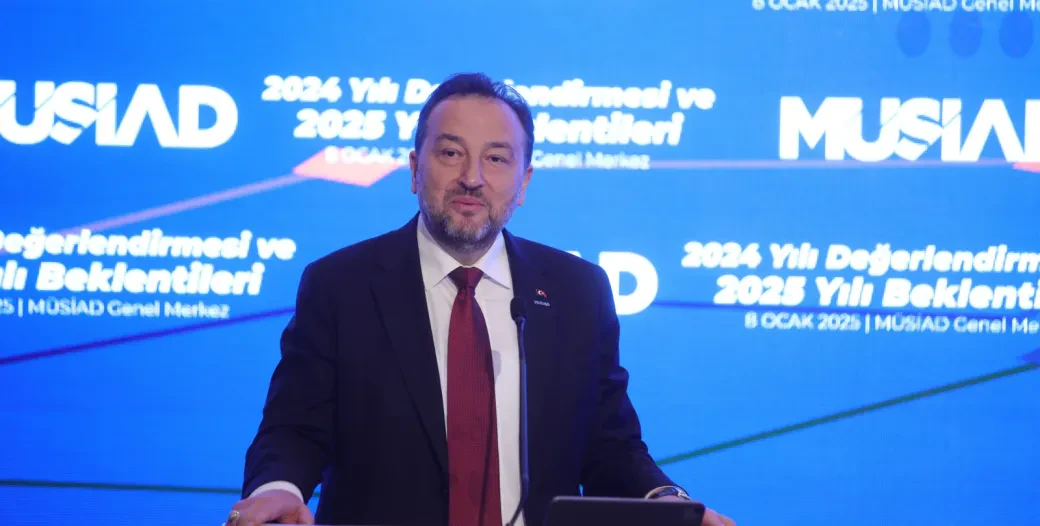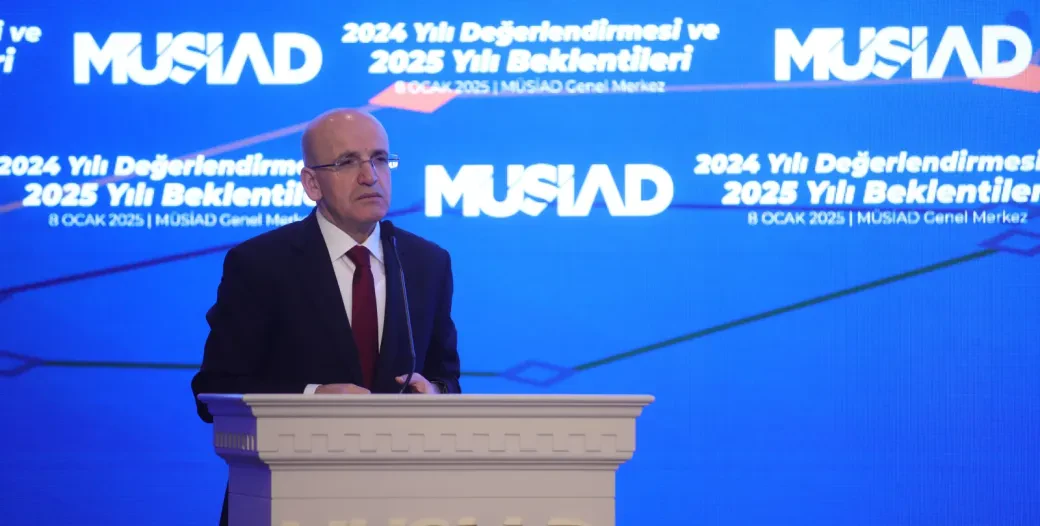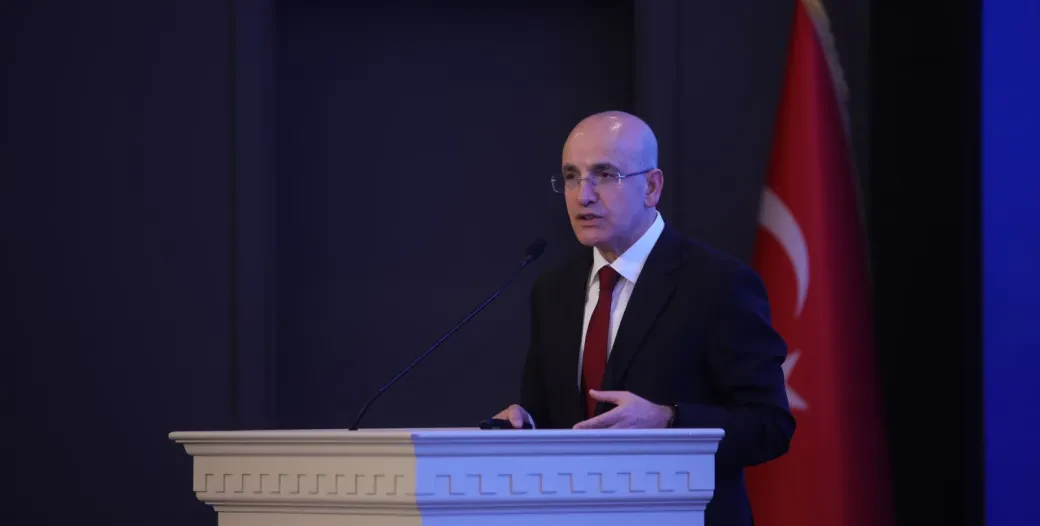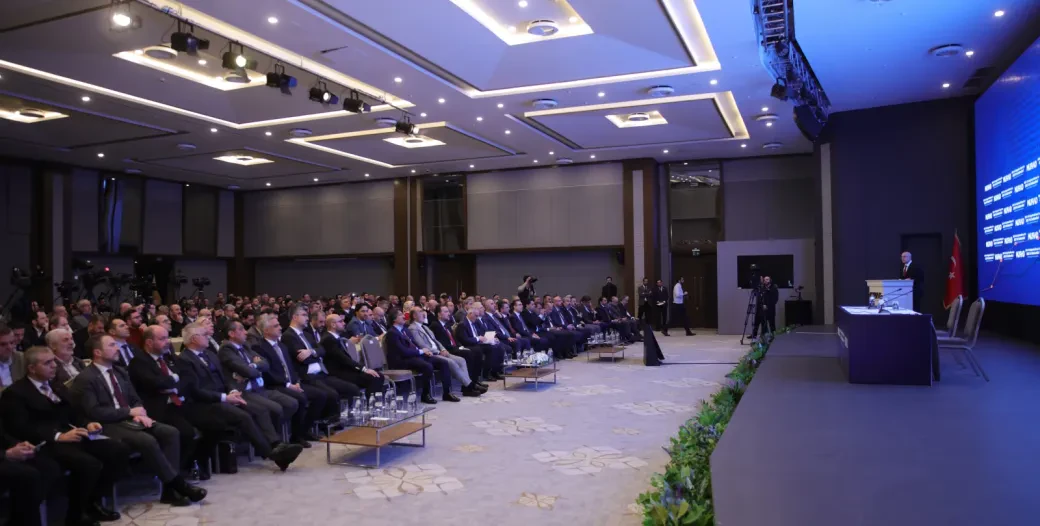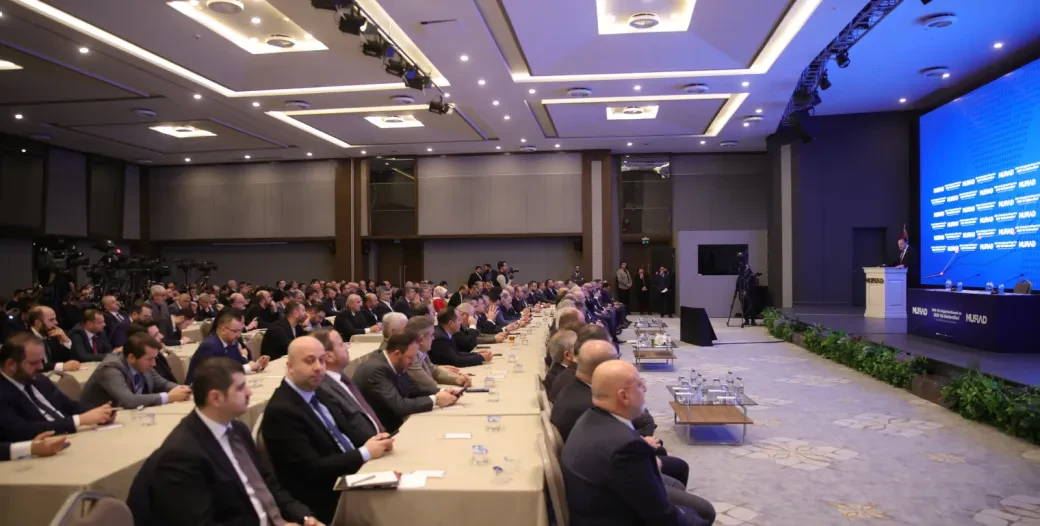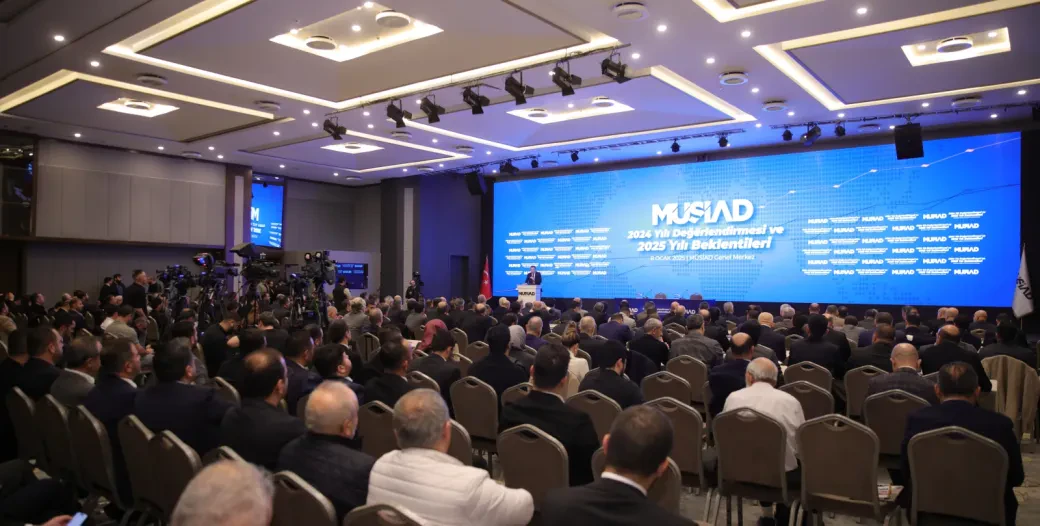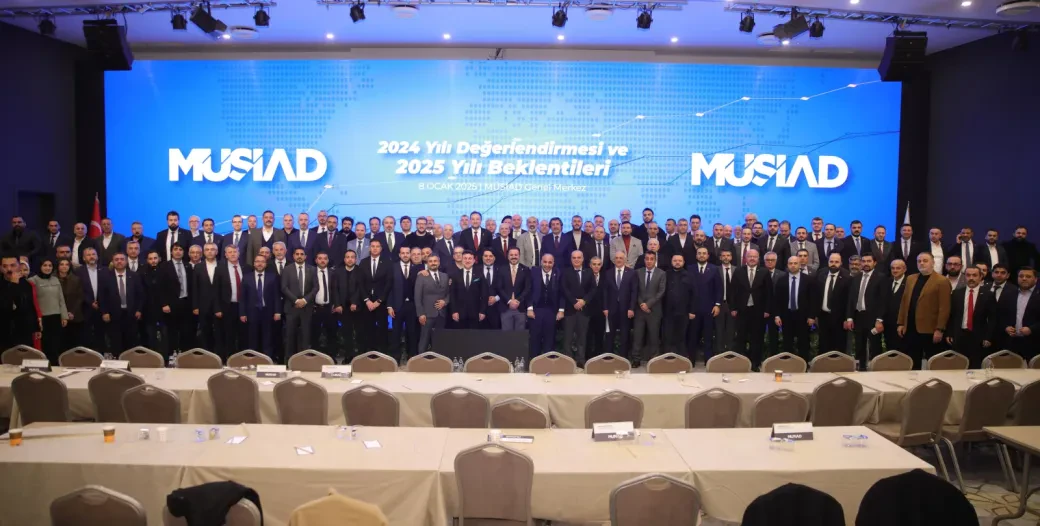
The Independent Industrialists and Businessmen Association (MÜSİAD) held its Economic Assessment and New Year Expectations Meeting, which it traditionally organizes at the beginning of each year, at the MÜSİAD Head Office with the participation of Minister of Treasury and Finance of the Republic of Türkiye Mr. Mehmet Şimşek. New year economic expectations were discussed at the program, which took place with the speeches of Minister of Treasury and Finance Mehmet Şimşek and MÜSİAD President Mahmut Asmalı.
MÜSİAD President Mahmut Asmalı shared his analyses of 2024 and his forecasts for 2025 at the meeting.
Assessing 2024, which was marked by global and local economic difficulties, Mahmut Asmalı emphasized Türkiye's fight against inflation and the need for structural reform in the economy. Asmalı said, “2024 was a difficult year for the real sector; however, the moderate increase in exports and the preservation of employment once again showed the resilience of the Turkish economy.”
Stating that the fight against inflation will also be the priority issue in 2025, Asmalı expressed the need in this process for structural reforms and innovation-based solutions that will increase the competitiveness of the real sector. He also stated that the newly launched Global Competitiveness and Capacity Development support programs and the HIT-30 Support Program will make great contributions to SMEs' development of innovative products.
“2025 Must Be a Year of Reform”
President Asmalı said the following regarding inflation and future expectations:
“In the new year too, the number one agenda item of the economy will be to bring down inflation. The survey we conducted among our MÜSİAD members also confirms the importance of this preference. However, it must be emphasized that this difficult struggle at the same time adversely affects the real sector's investments, employment opportunities and growth targets.
While the cost of the fight against inflation is being borne by our citizens and our companies, we must guarantee that these costs are not paid in vain.
We must turn this difficult period into an opportunity by putting into effect structural reforms that increase competitiveness, ensure more efficient use of idle capacity, strengthen the innovation ecosystem and improve income distribution. Thus the struggle and the sacrifices made over the last 1.5 years can become far more meaningful by making the Turkish economy more value-added, more fruitful and more inclusive. As the MÜSİAD family, we are ready to provide every kind of support in order to make 2025 a genuine year of reform.
The steps taken by our economic administration in the recent period in order to preserve the competitiveness of the real sector, such as the increases in rediscount credit limits and the Employment Protection Program, are highly valuable. The Central Bank's cutting of the policy rate at the last meeting of the year, in line with developments in inflation, has also been another development that gives hope to the real sector for 2025.”
While describing 2025 as a “year of reform”, MÜSİAD stated that it is determined to continue its work so that the Turkish economy gains a structure focused on sustainable growth, employment and investment.
“Inflation will continue to fall in the world in 2025”
Minister of Treasury and Finance Mehmet Şimşek made important assessments regarding economic forecasts and policies for 2025. Minister Şimşek said, "Geopolitical developments are an issue that we all follow closely and attach importance to. These developments will make Türkiye's rising geopolitical value more evident. In 2025 this situation will emerge much more clearly."
Touching on the issues that are effective in the world economy for Türkiye in the short term and that directly concern the country, Şimşek recalled that economic growth is expected to gain pace in 2025 in the European Union and in Türkiye's immediate neighbourhood. Pointing out that the realization of this would create a positive trend in terms of external demand and exports, Şimşek said:
"This development will create an effect supporting Türkiye's growth and export targets. However, we see that the increasing uncertainties in the economic policies of Europe and the USA largely stem from political dynamics. On the other hand, the decline in global inflation is a supportive element for us. More favourable short-term financial conditions will encourage both the Medium-Term Program (OVP) and economic activity. Moreover, no real increase is foreseen at present in commodity prices such as oil and natural gas."
Emphasizing geopolitical issues as well, Şimşek stated that Türkiye's increasing strategic importance will come to the fore more in 2025: "Türkiye will maintain its leadership role in solving many of the problems in our region. This will increase Türkiye's appreciation across the world and reinforce its strategic importance. In this context, the economic outlook in the short term is supportive of exports and the real sector."
Making assessments regarding the decline in global inflation, Şimşek said, "Compared with 2023 and 2024, inflation is expected to continue falling in the world in 2025. According to forecasts, global average inflation is estimated to decline to around 4.3 percent. In the USA and the European Union, which are among the developed countries, inflation rates are expected to fall to around 2 percent. If this is realized, both the European Central Bank and the US Central Bank are likely to lower short-term interest rates or keep them at low levels."
There Is an Environment Supporting the Turkish Economy and the OVP in the Short Term
Minister of Treasury and Finance Mehmet Şimşek said: "In short, in the short term there are positive conditions that may work in Türkiye's favour. This process creates a supportive ground for the Turkish economy and for the Medium-Term Program (OVP)."
Touching on the important difficulties the world economy will face in the long term, Şimşek made the following statements:
"Fragmentation and protectionist tendencies in international trade are increasing. Global debt levels are quite high compared with national income ratios. In addition, an economic environment in which long-term interest rates are high makes this situation even more complicated. The world population is ageing rapidly and this creates a serious demographic problem. At the same time, the world faces disruptive technologies that both have the potential to increase productivity and bring transformation; here artificial intelligence plays a critical role. Climate change is another important issue awaiting a solution. We see a move away from the rule-based, multilateral trade mechanisms established after the Second World War. We are entering a period in which protectionism outweighs free trade."
Stating that the geostrategic competition between the USA and China has made fragmentation in global trade a new norm, Şimşek drew attention to the effects of this competition on international trade and used the following expressions:
"Restrictions on trade have reached a significant level, particularly on the USA-China axis. In the last two years, a large number of restrictions have been applied in this area. The centre of global manufacturing industry has shifted. China's share in global manufacturing industry has risen from 8.6 percent to over 30 percent. In the same period, developed regions and countries such as the European Union, the USA and Japan experienced a considerable decline in their share of manufacturing industry value added."
Drawing attention to the fact that this shift has created new economic trends, Şimşek stated that the strategy of sourcing supplies from friendly countries is gradually gaining importance.
MÜSİAD Shared the Results of the Survey Conducted with Its Members
Data on the annual economy survey conducted by MÜSİAD with its members were also shared at the meeting. In the statement made by MÜSİAD regarding the survey, the following expressions were used:
“Nearly 900 of our members took part this year in our Economy Survey, which we traditionally submit to our members' assessment in the last month of each year. Particularly regarding the evaluation of 2024, we see that our survey has produced a result consistent with the official figures.
As will be recalled, the contribution of domestic consumption to GDP growth, which was 5.7 points in the first quarter of the year, fell to 1.1 and 2.1 points in the 2nd and 3rd quarters as demand conditions deteriorated. %53.6 of our members who took part in our survey likewise stated that their domestic sales recorded a decrease in 2024.
Likewise, the fact that %60.4 of our members who took part in our survey stated that their imports decreased compared with the previous year presents a picture parallel to the %4.9 decrease in our country's total import volume in 2024.
In the first quarter of 2024 investments contributed 2.2 points to GDP growth, while in the following period a visible loss of momentum was experienced and the contribution of investments to growth fell to 0.2 in the 2nd quarter and pulled growth down with -0.2 points in the 3rd quarter. %52.1 of our members who took part in our survey also stated that their investments decreased in 2024.
While %23.4 of our members see inflation as the most likely factor to affect the economy in 2025, the exchange rate and problems of access to financing stand out as the other leading answers. According to our survey, in which the expectation for the general economic course in 2025 was answered positively by a total of %67.3; our members' GDP growth estimate for 2025 is concentrated in the %1-%3 range, and their year-end policy rate expectation in the %26-%30 range.”