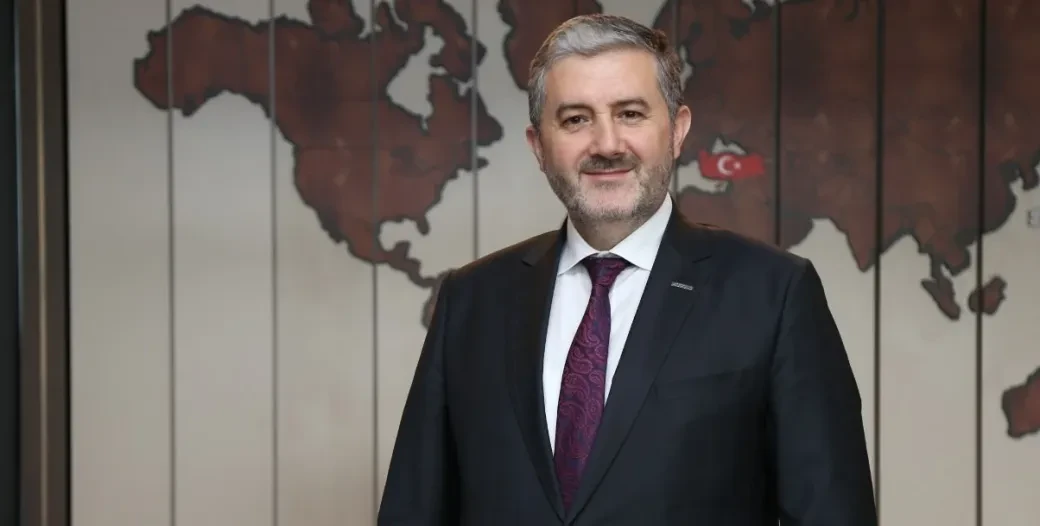
Abdurrahman Kaan, President of the Independent Industrialists and Businessmen Association (MÜSİAD), shared his assessments with Anadolu Agency on the effects of the pandemic period on the economy and the business world, the work MÜSİAD carried out during this period, the axis to which the trade wars have shifted after the outbreak, and the recovery process after the Coronavirus.
Could you give a general assessment of the pandemic period?
We should not address the issue solely on the axis of the pandemic. The pandemic became something like a bursting point for a world system that was already under strain. All the countries of the world are in fact going through a period in which crisis management, conventional risk management methods and political approaches are being tested. The crisis itself was not economic. Yet in terms of its effects, we can say that we are on the threshold of a process that will affect us deeply and reshape both the economic architecture and the socio-cultural architecture across a wide spectrum, from our business models to our system of values.
When we examine the global economic data before the pandemic (which we as MÜSİAD shared with the public in the form of a report), the OECD and WB growth forecasts before the COVID-19 outbreak pointed to a contraction in production worldwide. The projections revised in November, on the other hand, had been calculated by simulating the effects of the trade wars. Not only the trade wars, but also OPEC's oil policy, the impact on markets of the risks that political uncertainty in Syria and the Middle East would create, and the decline in global investment appetite were already steering countries towards an expansionary monetary policy. In line with sluggish global growth expectations, most of the price forecasts for 2019 were revised, particularly for energy (minus 15 percent). While energy and metal prices were expected to continue falling in 2020, agricultural commodity prices were expected to gain partial stability.
In the statements we made at that time, we underlined that a sharp commodity crisis awaited the world in 2020 and beyond. We repeatedly underlined not only commodities, but also that we were in a vicious circle in which real economic problems were being addressed through financial instruments and policies, and that this situation would cause money to lose its value and its definition, especially through the inflation of the derivative markets, and would even bring the monetary system to the point of collapse. Because if strategic analyses are to be made on a subject, two elements must be taken into account: 1. You must read history and the process well. 2. You must read the figures and the micro data from the field well. Thanks to MÜSİAD's breadth in the field, we saw the data sets reaching us both at home and globally in the pre-pandemic period as the footsteps of a crisis and the starting point of a transformation, and we had shared this on various occasions.
Leaving aside trade shifting towards the East before the pandemic, the marked declines observed since 2017 in global goods trade and in logistics volume in terms of ports and air transport were already telling us that the global economy needed a new model and a new motivation in order to revive. Yet there is a critical point here that matters for the future course of the pandemic's effects: before the crisis, the production-based growth trend of the top 20 developing countries was upward, while in the developed 20 this trend was downward. As the world economy shifted eastwards, production bases were changing hands and capital was finding new areas of production. In a world where national economies were regaining strength, the production capacities of the developed countries dominated by large companies were declining, while the world's new area of investment and production was the blocs formed by the developing 20. Now, together with the heavy fiscal packages announced by the developed countries during the recovery process, this also points to a much more radical decline in the growth rates of these countries in the period ahead, and correspondingly to their turning towards tighter fiscal policies.
Therefore, giving a near date for economic normalization or for coming out into the clear in global terms may not be right at this stage. Because it appears that both the IMF and the World Bank are revising their recession forecasts towards bad-scenario simulations. If a contraction in the %10-12 band is being spoken of, this means it would not be surprising for the domino effect to continue for a long time in the interdependent trade and investment chains of all the world's countries. Because the essential point here is that the course of the pandemic varies from country to country; that is, the “pandemic course that changes from country to country” requires waiting for the scenario to be completed in all countries. Even though the disease has been brought under control in a few countries either through social immunity or after the measures taken, the continuation of its radical course in different countries brings with it two important dangers for the industrialist or those engaged in trade: 1. Being exposed to country risk. 2. Being exposed to sector risk. For companies working mainly in foreign trade, exposure to country risk is in question. The normalization processes in the countries they export to must be followed. Factors such as falling incomes in the countries traded with, the depth of losses in sectors, and changes in quarantine policy mean that our companies will be exposed to country risk. Therefore, new commercial partners must be found and supply chains must be diversified. Companies in services, tourism, transport-logistics and manufacturing industry, which are directly affected by the scope of quarantine, still carry sector risk. Here, business models will have to be changed.
Moreover, the pandemic should not be addressed only within the scope of economic elements. Yes, the world economy was definitely caught unprepared for such a crisis. But here we are not facing a milestone only for a change in the economic architecture. We are also on the threshold of a technological transformation that will enormously affect our social life. We can say that we are going through a simulation in which we test our own competences and habits in many areas, from remote work to distance education.
The pandemic should move us to question the efficiency of three fundamental points: 1. The efficiency of capital and of the capital stock. Look, a state's saving power in times of crisis is its capital stock. Yet many countries saw in this period how fragile a capital stock they possess. Many countries, including us, realized that capital accumulation is clustered in a few countries, chiefly China, that the national capital stock in their own country is insufficient, and that it has taken shape far from efficiency. 2. The efficiency of incentives and supports. That is, I am speaking of testing how efficiently supports are converted into investment. Incentive systems and supports make the capital cycle efficient as long as, at the end of the day, they serve investment and capital accumulation. Yet the pandemic showed us that we live within a system that keeps itself occupied inside a serious paradox between capital and wealth. 3. Our Entrepreneurship Policies and entrepreneur efficiency. The pandemic period in fact offered all the world's companies a test environment proportional to their scale. We may think of it as a kind of resilience test. While encouraging entrepreneurship, we must consider this: is there a need for everyone to be an entrepreneur or a producer? This must have certain preconditions and limits. Otherwise, companies that are not resilient become a burden on states in such times of crisis. We have seen this too during the pandemic.
Finally, the pandemic did not only open a door for us to change our economic paradigms. It should also be regarded as a serious warning mechanism at the point of reconsidering our bond with our system of values in social life. We are going through a period in which we hear the footsteps of ways of doing politics, of the fact that the element of trust nations feel towards one another does not actually exist, of the reality that leader-based forms of government can survive only with the support they find at the grassroots, and of course of state capitalism and of the return to national economies. The essence of the matter is this: since we are speaking of a milestone, it is clear that many old concepts have to go into the bin. It is essential that we evaluate this process with new conceptualizations and new sets of models. The outcome we will reach with a new Bretoon Woods, or again with the same polarized economic structure, may leave us face to face with the outright bankruptcy of a world system that will no longer be able to bear this burden in new pandemics likely to recur.
How do you assess the supports the government has provided to sectors during the pandemic period and the new normal period?
We can say that Türkiye has definitely displayed very good crisis management during the pandemic period. The source of the crisis is the disease itself. Until the disease passes completely, normalization in the crisis will be achieved gradually. We must take this as clear data. That is, we continue to act cautiously. Countries with a much stronger fiscal position managed the process with wider packages. Yet the prevalence of the outbreak in those countries is this time swallowing the supports they gave to the system like a black hole. America is an example of this. Because the size of the package and the scale of the outbreak advanced at the same rate, the financial losses in the developed countries too turned out to be at almost the same level. Of course the difference in the size of their supports will be an important factor in increasing the speed of their exit from the crisis, but this time they will struggle in the period ahead with the sectoral contraction and the tight fiscal policies awaiting them. In short, it is clear that as the money they spend and the resources they allocate for the outbreak in proportion to their national income increase, these countries will move towards a tighter fiscal discipline in the period ahead. Thus, the contraction in the countries we trade with and the financial situation of the companies there will also directly affect our trade and our normalization process. Türkiye managed the process by bringing the outbreak under control and shortening it with less financial loss (by reducing the scale and speed of the outbreak). By bringing the outbreak under control in a short time, we started the normalization process early. Otherwise our waste of resources would have begun. Türkiye does not have the luxury of wasting resources. By bringing the outbreak under control in a short time through its health system and its measures, Türkiye also prevented possible financial losses. Unfortunately, we saw in this period that criteria such as so-called democracy, human rights and respect for the right to life in the developed countries remained mere rhetoric because of the fragilities in their health and social security systems. That is, the developed countries paid a very heavy price in this period for the monopolization and the unjust distribution in their social security systems. As for us, praise be to God, the health investments we made in advance — which were much questioned at the time — and the adequacy of our social security system kept us standing firm throughout this period. Indeed, with the field hospitals and pandemic hospitals that were established, we enjoy a measure of comfort thanks to the financial resources that health exports and health tourism will provide us.
The government announced the support packages gradually and without letting go of the measures. That is, it did not choke the market by pouring everything in at one go. Taking feedback from the field, it ran this process in three different dimensions: 1. At the household dimension, 2. At the dimension of protecting the working segment, 3. At the dimension of protecting the real economy sectorally across a wide spectrum, from the SME to the industrialist, that is, the producing segment.
While keeping the real sector on its feet, steps were also taken through the regulatory bodies and the Central Bank in particular in order to prevent fluctuation in the financial markets and to minimize monetary erosion. Expansionary monetary policy was of course implemented in our country as it was all over the world. Yet, although the increase in the pace of emission here may be perceived as a second problem to be disregarded during the crisis, I would also like to underline that in the continuation of the new normalization this pace must be reduced and the excess cash must gradually be withdrawn from the market.
In addition, I can say that steps such as the regulations issued through the omnibus law — particularly the regulations facilitating the opening and operation of workplaces — the relieving effects that KGF support created for our companies that struggled in this period, and tax deferrals and reductions, provided quite effective crisis management in terms of their timing, their coordination and their structures designed directly to meet needs.
The policies encouraging domestic and national production, and the import bans introduced on many product groups in this period, caused us to test our own national production capability and capacity as well. In this sense it is possible to speak of a business world that has gained courage. Furthermore, direct supports for exports and the strategic work initiated to diversify supply chains are preparing a promising ground for us in terms of the post-Corona period.
What kind of supports did you as MÜSİAD provide to your members during the pandemic period?
As MÜSİAD, we put our Crisis Management and Coordination Centre into operation on 16 March, right after the first case was announced. With more than 11 thousand members and a broad member profile, MÜSİAD is the most widespread capital organization in the field. It manages a wide spectrum, from its scale to its sectoral breadth and of course to its extensive organizational network abroad. Therefore, we took an active role in the field so that first our members and then our whole nation would come out of the crisis with the least damage. We shaped the crisis centre we established under four headings: 1. The unit providing the flow of data from the field. Here we immediately compiled and reported the information coming from our members and from our branches and representative offices both at home and abroad, and regularly informed state institutions and organizations about the course of the pandemic, the needs, the demands and the shortcomings. In this sense I can say that we acted as an intermediary in order to ensure that the measures taken were effectively implemented in the field and to support the spread of supports and incentives in the field. In this period we contacted our members one by one, whatever their scale, continuously collected their needs and demands, and conveyed them to the relevant authorities. That is, in this period MÜSİAD once again placed its breadth and depth in the field at the service of its State and its nation. As a second unit, we operated bureaucratic management. We were in constant contact and coordination with the relevant ministries and institutions and organizations, and sought to prevent data leaks or duplicate procedures. We kept communication on this matter constantly fresh and effective with our stakeholders such as TİM, DEİK and TOBB. As a third unit, we operated the operational line. In this period, which also coincided with Ramadan, we reached those in need through our breadth in the field. Within the scope of the “We Are Enough for One Another, My Türkiye” campaign launched by our esteemed President, together with our members who love Türkiye we stood by our nation with a total of TRY 125,000,000 in support. In addition, we called on our members to donate to our MÜSİAD Qard al-Hasan Fund practice. Accordingly, we created financial resources for our members who fell into difficulty.
In addition, throughout Türkiye and in the countries where our branches are located, we prepared 98 thousand food parcels and delivered them to those in need through the Vefa Support Groups at home and through the Red Crescent abroad.
In this period we also provided intense support for the Zimem (credit) Ledger campaign that MÜSİAD has been implementing since previous periods. By purchasing 425 Zimem ledgers from our tradesmen across Türkiye, our members enabled the payment of the debts of indebted citizens totalling approximately 2 million 175 thousand liras.
We did not forget our healthcare workers either, who made the greatest effort and fought heroically in this period. By distributing masks, protective clothing, disinfectant products and many health products to health institutions and public institutions, we made them available for the benefit of our citizens.
Furthermore, both our MÜSİAD LOCAL and MÜSİAD GLOBAL brands took an active role both in identifying needs and in resolving the difficulties experienced by our citizens abroad and bringing them to Türkiye.
As a fourth unit, we operated the strategic reporting and research section. In this period, with the Corona Crisis Management Centre we established at the Head Office, we carried out work providing crisis management, the planning of post-Corona processes and one-to-one support to our enterprises on crisis management issues. We held approximately 232 online conference meetings via webinar with leading figures of politics, the business world, NGOs and society — foremost among them our Minister of Trade Ruhsar Pekcan, our Minister of Treasury and Finance Berat Albayrak, our Minister of Family and Social Policies Zehra Zümrüt Selçuk and AK Party Deputy Chairman Numan Kurtulmuş. We brought our members together with experts on the subject. We created not only technical but also moral support. By calling our members one by one or going to them in person, we made them feel that we were beside them throughout the process. Because MÜSİAD is not merely a capital platform but a large and strong family. In this period we saw and experienced the power of being a family once again.
Again in this period, our YOUNG MÜSİAD and MÜSİAD WOMEN structures took a highly effective role in the field. I can say that in this period our youth organization and our women members left no place in Türkiye unvisited, both in delivering what was needed and in running the campaigns effectively.
How do you assess the low-interest financing packages, particularly for housing and automobile purchases? What kind of contributions will they make to the market?
First of all, I would like to express our satisfaction with the downward trend in credit costs. As we have stated repeatedly, we will always stand behind an interest-free system and behind alternative funding and support models. Yet it is possible to see this as a useful step taken to revive the market and especially to melt down housing stocks. However, there is a point we must underline here: the increases in housing prices. Together with these increases, the efficiency of the new financing package will come up for debate. The increase in second-hand housing and second-hand automobile prices has these days also spread to first-hand housing and automobile prices. In general it is possible to speak of a price increase of between %10-20. This too can cause the support provided to melt away amid rising prices. Our demand is that the practices reducing credit costs be extended not only to housing but also to the purchase of industrial zones and facilities within the scope of long-term workplace acquisition. Thus the producer whose production capacity increases will turn to housing and automobile purchases with the income coming from production. Otherwise, encouraging only purchases can cause money to turn into stock rather than into production.
The trade wars between China and the USA have gained a new dimension with the coronavirus outbreak. How is the global struggle affecting the Turkish exporter?
Addressing the main axis here solely on the axis of the trade war between China and the USA would lead to a limited analysis. The process here must be examined. Analysing the years between 2000 and 2020 well will, in this sense, provide us with a suitable reading of history for the hegemony struggle ahead. The process that began with the September 11 attacks in fact became the milestone of brand-new power struggles, and in time China joined the game as a giant player. With China's entry, economic production and supply lines also began to shift increasingly towards the East. At this point China in fact became the new centrifugal point of the eastern economies. We can even go a little further back and take the matter as far as China's admission to membership of the World Trade Organization. As you know, China's WTO membership was much debated and the fact that it would lead to competition-distorting practices was addressed at the G7 Summits of the period. Indeed, before long, what had been foreseen began to occur. Many applications originating from China were made to the World Trade Organization's Dispute Settlement Mechanism, and in most of them China's market-distorting moves, in the form of undercutting prices with its low-cost advantage and copying patented products, began to unsettle the Western economies. China here is not an element on its own; as I said just now, it is a centrifugal field. When the Indian, Pakistani, Turkic Republic and Indonesian fronts also enter the picture, an Eastern Economic Bloc emerges. The fundamental element supporting this is China's Belt and Road Project, the expanded form of the historical Silk Road. What is at stake here is not only establishing a new logistics network but also a plan to create a guided supply chain. Look, one of the reasons we were caught so unprepared by the pandemic was the policy of guided supply lines originating from China. Today, on average %7 of manufacturing industry production in the world depends on intermediate goods imports originating from China. For our country this stands at % 6. In times of crisis this dependence creates an enormous domino effect. Likewise, in the computer, electronics and other equipment sectors, the added value produced by China stands at % 27. In transport and related sectors this ratio stands at %145. Such a dependence, on top of which trade routes are connected to one another within the scope of a belt project, issues an invitation to a power impossible to cope with.
However, Türkiye's geopolitical position here is not like that of other countries. Because of their geographical location, the Western Economies are in the position of being the recipients of this new logistics line. In a world where production is shifting increasingly towards the East, Türkiye must this time make good use of the destiny that geography offers it. The EU, the USA, Africa and the Gulf Region have become consumption regions within this line. At this stage Türkiye is both a production point because of its attractiveness for the Eastern economies and a transit region in terms of delivering products to the Western Economies. Not only the Silk Road line, but also the Spice Road line, which encompasses Syria and extends as an alternative from the south, likewise advances within Türkiye's hinterland. In order to use the export advantages correctly here, the correct investment policy must first be implemented. Operating investment within a production-trade-investment synchronization, rather than addressing it as an independent component on its own, means that in the post-Corona period Türkiye will become attractive both through a positive product-production perception and as a safe investment area in the face of the foreign exchange flows drifting in the developed markets.
In the end, the struggle between China and the USA will not end. On the contrary, now that the struggle between China and India has also been added to the game, it is essential that within a multilateral and complex equation our exporters diversify their supply chains so as to suit every possibility and position their own alternative logistics lines as soon as possible in the form of plans A, B and C.
However, as I stated at the beginning of the interview, the complete normalization of the commercial process depends on the course of the pandemic. There is a four-stage course here: 1. If countries begin to normalize one after another and operate their production lines in their own critical sectors, 2. If capacity increases in critical sectors — say in the manufacturing industry — reach a satisfactory level in almost every country, including ours, 3. If the problem of trust both between countries and among the citizens, investors and producers within a country gradually begins to improve, and finally if qualified planning for exports, investment and foreign-exchange-earning transactions begins to be made from now on, the post-COVID period points to an attractive international arena for exporters in Türkiye.
President Kaan: by Addressing Investment Within a Production-Trade-Investment Synchronization We Can Become an Attractive Country
News from MÜSİAD